
Buckley Hall Prison: drugs, self-harm and ‘requires improvement’
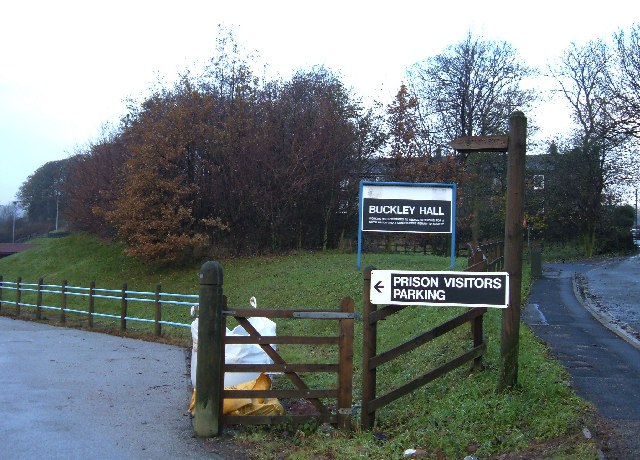
Rochdale’s category C prison is meant to send men home sober, skilled and steadier. Inspectors and monitors say drugs, lock-ups and thin education are getting in the way.
Analysis
Buckley Hall prison in Rochdale is not doing enough to rehabilitate the roughly 460 men it holds, according to its inspectors and independent monitors.
Prison is a punishment, and it is meant to deter. Few in Rochdale would argue otherwise. But a category C “training” prison has a second job written into its name: to return men to communities like ours able to work, stay sober and cope. The official record suggests Buckley Hall is falling short of that second job.
What the inspectors found
HM Inspectorate of Prisons last made an unannounced inspection of Buckley Hall from 12 to 23 February 2024 and published its report on 20 May 2024. The Chief Inspector found “a slow but perceptible decline” at the prison over recent years.
Inspectors concluded that Buckley Hall was not fulfilling its core function as a training prison. On average, 31% of prisoners were locked in their cells during the working day, and there were not enough places in education, skills and work for the number of men held.
Ofsted, which inspects prison education alongside the inspectorate, rated education, skills and work “requires improvement” overall. Quality of education, personal development, and leadership and management were also rated “requires improvement”. Behaviour and attitudes were rated good. Education at the prison is provided under contract by Novus.
Inspectors said workshop instructors did little to develop men’s English, maths or reading. A new personal development curriculum was too ad hoc to be effective.
Drugs
Drugs were the sharpest concern. The Chief Inspector said well over a quarter of prisoners were active drug takers at the time of the inspection.
Nearly half of the men surveyed (48%) said illicit drugs were easy to get, against 33% at comparable category C prisons. In the previous six months, 27% of random drug tests had come back positive. Only 58% of requested cell searches had been carried out in the previous three months.
The position had not improved a year later. In June 2025 a man died at the prison, and the Prisons and Probation Ombudsman investigated. Its report recorded an average positive random drug test rate of 37% between July 2024 and June 2025, which it called very high.
The same investigation found that drug testing on the prison’s Aspire unit had been reduced because of staff shortages. Intelligence gathered after the man’s death suggested he had owed a debt for psychoactive substances.
The prison’s Independent Monitoring Board (IMB) says drones are not the main problem. Its 2024–25 report says the bigger route is parcels thrown over the fence from a public right of way. Board members also saw identity checks at the gate not always being carried out.
In a letter to the board dated 22 December 2025, prisons minister Lord Timpson said a full enhanced gate security installation at Buckley Hall would need major structural work and is currently unfunded. He said more staff searches, clear bags for staff and stronger identity checks were being used instead.
Self-harm and wellbeing
Inspectors counted 194 self-harm incidents in the 12 months before the 2024 inspection. That was fewer than at similar prisons, but much higher than in 2019 and still rising.
Some 28% of men said they had been on an ACCT plan, the Prison Service’s case-management process for people at risk of suicide or self-harm, against 18% at similar prisons. Only 37% said they could speak to a Listener, a trained prisoner peer supporter, down from 54% in 2019.
The IMB recorded 81 self-harm incidents in the final quarter of its 2024–25 year alone. Kept up for a full year, that pace would equal roughly 700 incidents per 1,000 men, by Rochdale Daily’s calculation. The national rate in men’s prisons was 673 per 1,000 in the year to June 2025.
The board also reported that three men had died in custody at Buckley Hall in 2025 by the time it wrote its report.
Healthcare is one area that has improved. The IMB found a marked improvement in its quality, with nurse-led triage clinics on the wings most days. Physical healthcare is provided by Spectrum Community Health CIC and mental health care by Greater Manchester Mental Health NHS Foundation Trust, which includes the Hive, a safe space for men with mental health difficulties.
Spectrum runs clinical drug and alcohol services, with Change Grow Live providing non-clinical recovery support, according to the 2024 inspection report. In June 2025 the drug and alcohol recovery team was working with 180 men, and about 70% of new arrivals signed up for help, according to the IMB.
Anyone affected by the issues in this article can contact Samaritans free, at any time, on 116 123.
Rehabilitation
Inspectors described offending behaviour work as quite limited. The Thinking Skills Programme was replaced by Building Choices in January 2025, and the first group of eight men finished in March 2025.
The Sycamore Tree victim-awareness course has been withdrawn nationally, and a gym instructors’ course was cancelled because of financial constraints, the IMB says.
The Aspire unit can hold up to 60 of the prison’s men serving indeterminate sentences. It is meant to let them progress with less supervision, but inspectors found in 2024 that this was not happening in practice. According to the IMB, 14 men serving IPP sentences were released from Buckley Hall in the first seven months of 2025.
The prison does score well on relationships. Inspectors said excellent relationships between staff and prisoners underpinned much of its success. Some 78% of men knew they had a sentence plan, against 61% at similar prisons, and support for the few men released directly from Buckley Hall was very good.
What prisoners told inspectors
Rochdale Daily could find no published, verifiable first-hand account from a former Buckley Hall prisoner. The clearest public record of prisoners’ views is the inspectorate’s own survey from February 2024.
In it, 56% said complaints were easy to make, down from 78% at the previous inspection in 2019. Only 26% said complaints were dealt with fairly, down from 54%. Some 200 complaints had been rejected when they were submitted for being unsigned, undated or on the wrong form, and many were never resubmitted.
Inspectors judged that weak consultation, complaints and applications processes had undermined the prison’s rehabilitative culture. They also recorded that Buckley Hall had the lowest number of complaints of any category C prison.
How Buckley Hall compares
On violence, Buckley Hall remains one of the calmer category C prisons. Inspectors found violence lower than at most, with fewer serious assaults.
Its “requires improvement” education rating is better than many. The Commons Justice Committee told MPs in November 2025 that 75% of prisons Ofsted inspected in 2024–25 were rated “inadequate” or showed no improvement.
On drugs, it is worse than average. Its 48% “easy to get” figure compares with 33% at comparable category C prisons and 39% across all prisons inspected in 2024–25, according to the Chief Inspector’s annual report.
No robust national positive drug test rate has been published since 2017–18, when it was 21%, according to the National Audit Office. The Chief Inspector says inspectors regularly find rates above 30%. HMP Manchester has recorded 39%, and HMP Hindley near Wigan reached 59% in the six months before inspectors returned in August 2024.
Staffing
In 2024, inspectors found no prison officer vacancies at Buckley Hall. But officers were regularly sent to work at other prisons, so those left behind were redeployed and the daily regime suffered.
By the end of July 2025, the IMB reported 18 staff off sick and four on restricted duties. Wings were locked down on rotation, and gym sessions and religious services were sometimes cancelled.
The men being held have changed too. The IMB describes a much more transient population, with some men arriving with only a short time left to serve, too little to gain workshop experience. Lord Timpson put the prison’s churn rate at around 50% and said Buckley Hall is planned to become a fully category C training prison by 2027.
Nationally, the leaving rate among prison officers was 10.8% in the year to December 2025, down 1.7 percentage points on the year to March 2025, according to HM Prison and Probation Service figures.
Experience is the deeper problem. A Channel 4 FactCheck analysis found 40% fewer officers with at least five years’ service than in 2010. The Prison Reform Trust has said four in ten officers have less than three years’ experience.
Which government ran prisons worst?
The long-run figures do not flatter either party.
Frontline prison officer numbers were cut by around 30% between 2010 and 2013 under the Conservative and Liberal Democrat coalition, when Chris Grayling was Justice Secretary. Assaults reached a record 34,425 in the year to March 2019, under a Conservative government. The national self-harm rate more than doubled, from 310 per 1,000 prisoners in 2010–11 to 699 in the year to March 2019.
Labour took office in July 2024. The self-harm rate peaked at 899 per 1,000 in the year to March 2025, a period spanning both governments. Deaths in custody hit a record 411 in the year to September 2025, entirely under Labour.
The latest figures, published on 29 October 2026, show improvement. Deaths fell 12% to 360 in the year to September 2026, and self-inflicted deaths fell 32% to 66. The self-harm rate fell 10% to 789 per 1,000 in the year to June 2026, and assaults were 5% below their 2019 level.
Measured by violence, the worst year on record came under the Conservatives. Measured by deaths and self-harm, the worst 12-month periods came after Labour took office.
Labour ministers say they inherited a system close to collapse. Justice minister Jake Richards told MPs in January 2026 that at one point in 2024 fewer than 100 places were left across the adult male estate. Critics put the blame on the current government: in October 2025 the Howard League for Penal Reform said the figures showed “the everyday failure presided over by the government”.
What politicians have said
Rochdale MP Paul Waugh (Labour and Co-operative) used a Commons debate on 11 November 2025 to thank officers at Buckley Hall. He said they had “held the line in the face of impossible cuts and challenges” during the previous government’s 14 years.
The Commons Justice Committee, chaired by Hammersmith and Chiswick MP Andy Slaughter, visited Buckley Hall and Greater Manchester probation services and wrote to Lord Timpson about the visit on 12 February 2025. The minister replied on 28 February 2025.
Concerns about staffing at the prison are not new. In 1996, when Group 4 ran Buckley Hall privately, Rochdale’s then Liberal Democrat MP Liz Lynne told the Commons it had one officer for every 3.7 prisoners, against one for every 2.7 at other male category C prisons. The prison returned to public-sector management in 2000.
Rochdale Daily could find no published comment from a Rochdale Borough councillor on conditions at the prison.
When will inspectors return?
No date has been announced, and prison inspections are unannounced. HM Inspectorate of Prisons inspects adult prisons at least once every five years and expects to visit most every two to three years, with Ofsted inspecting education at the same time.
With the last full inspection in February 2024, the next must take place by February 2029 at the latest. On the inspectorate’s usual pattern, it could come at any time.
On the measures its own inspectors and monitors use — time out of cell, drug use, self-harm, education and offending behaviour work — Buckley Hall is not meeting its aims as a training prison.
Rochdale Daily invites comment from the governor of HMP Buckley Hall and HM Prison and Probation Service; from the prison’s contractors Novus, Spectrum Community Health CIC, Greater Manchester Mental Health NHS Foundation Trust, Change Grow Live and Amey; from HM Inspectorate of Prisons and Ofsted; and from Rochdale MP Paul Waugh. Responses can be sent to news@rochdaledaily.co.uk.
Sources: HM Inspectorate of Prisons, report on an unannounced inspection of HMP Buckley Hall, 12–23 February 2024, and prisoner survey; Independent Monitoring Board annual report for HMP Buckley Hall, 1 August 2024 to 31 July 2025; Lord Timpson’s response to the board, 22 December 2025; Prisons and Probation Ombudsman fatal incident investigation, HMP Buckley Hall, June 2025; Ministry of Justice Safety in Custody statistics; HM Prison and Probation Service workforce statistics; HM Chief Inspector of Prisons annual report 2024–25; National Audit Office; Hansard. Photograph: Michael Ely, via Wikimedia Commons (CC BY-SA 2.0).
Read next
 CommunityRochdale Council plans £5.6m improvement for temporary accommodation
More from Rochdale
Rochdale deputy council leader detained twice in Pakistan Letchworth Avenue closed to vehicles for roadworks until 14 December
 Rochdale White Ribbon vigil: where Wednesday's walk starts and how to joinThinking about fostering? Free advice stall at Rochdale Riverside on WednesdayMorning Briefing: Monday 23 November 2026


Legal and editorial note
This article was compiled from identified public sources and may be updated.
Right to reply: Corrections or right of reply: news@rochdaledaily.co.uk.