
Comment: Should fireworks be allowed on any night but bonfire night?
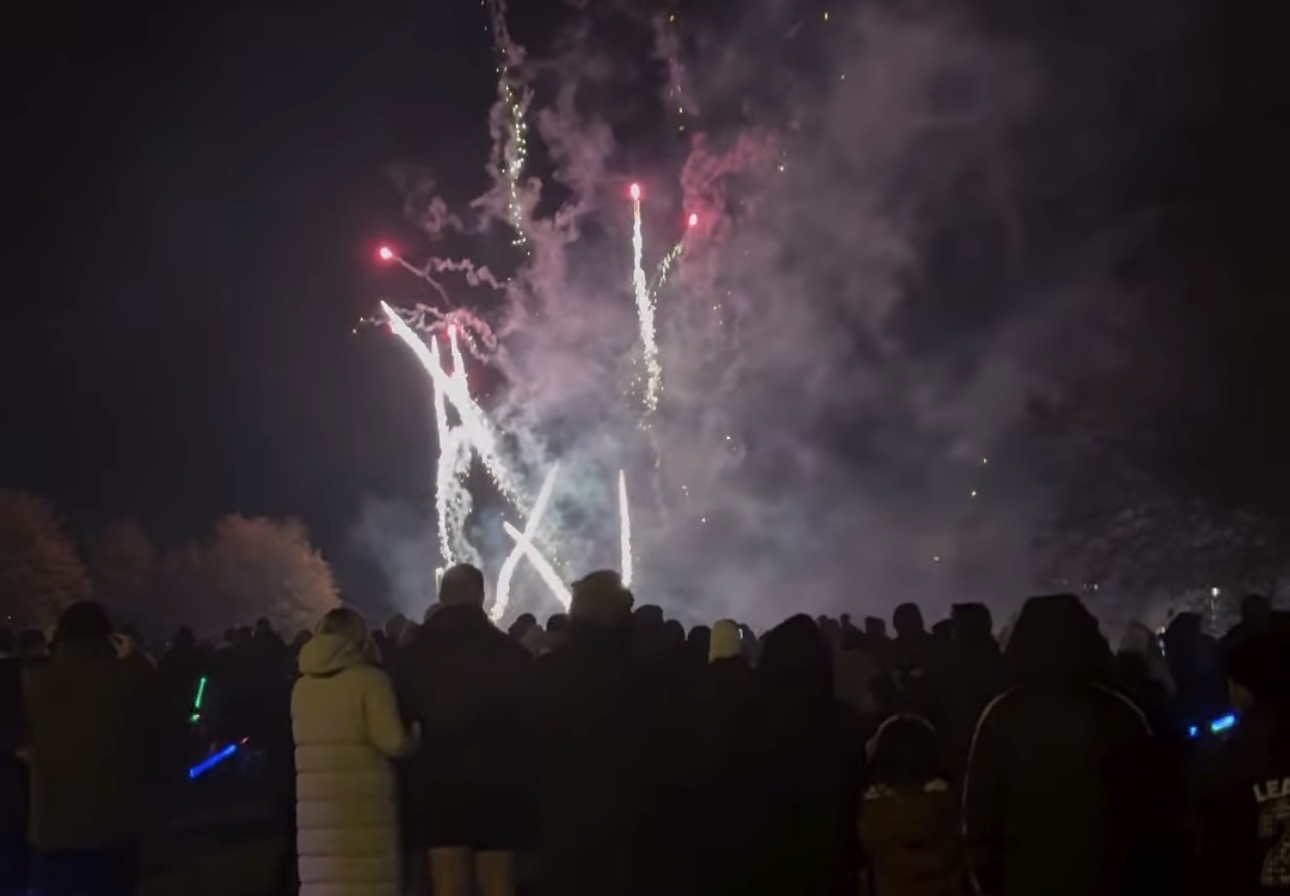
Rochdale's council displays went quiet this year, but residents say fireworks carried on into this week. We look at the law, the harm to people and animals, and what could change.
Rochdale Borough Council chose reduced-noise fireworks for its three bonfire events this year, yet residents say the bangs have carried on well into this week. Is it time to ask whether fireworks should be allowed on any night other than bonfire night?
The council's displays ran on Monday 2 November in Middleton, Tuesday 3 November in Heywood and Wednesday 4 November at Cronkeyshaw Common. None fell on Thursday 5 November itself.
By most accounts the Cronkeyshaw display worked: an eyewitness told Rochdale Daily that the quieter, music-led fireworks were enjoyed by a large crowd with little traffic disruption.
The problem is what happens outside the organised events. Residents have reported fireworks through the weekend and into Monday, after the council displays and bonfire night had both passed.
This is not new. In July and August, households in Shawclough and Healey reported explosions after 11pm on consecutive nights, with parents describing children woken after bedtime and pet owners describing distressed animals.
At full council on 15 October, Councillor Jordan Tarrant-Short raised residents' concerns about fireworks being used throughout the year. Councillor Tricia Ayrton said she had been speaking with partner agencies about a coordinated response, and encouraged councillors to raise the call for stronger national action with their MPs.
What the law actually says
In England, adult fireworks may not be set off between 11pm and 7am under the Fireworks Regulations 2004. The exceptions are bonfire night, when the cut-off is midnight, and New Year's Eve, Diwali and the first day of Chinese New Year, when it is 1am. Council-run and national celebration displays are also exempt.
Outside those nights, nothing stops a private display at 10.59pm on any evening of the year.
Shops without an all-year licence may sell to the public only from 15 October to 10 November, from 26 to 31 December, and in the days before Diwali and Chinese New Year. Retailers with a council licence can sell all year round. Consumer fireworks are capped at 120 decibels, and it is an offence to sell adult fireworks to under-18s.
The curfew is enforced by the police, and breaches can bring a fine of up to £5,000. In practice, proving who lit a firework in a back garden at 11.30pm is difficult, and a short burst of noise rarely meets the threshold for a council statutory nuisance investigation.
Scotland has gone further. The Fireworks and Pyrotechnic Articles (Scotland) Act 2022 restricts public use to 6pm to 11pm, with later cut-offs on the main celebration nights, and lets councils designate firework control zones where fireworks are banned at all times.
The physical harm
NHS England figures reported last month showed 161 firework-related hospital admissions in England in 2025, up from 120 the year before. November alone accounted for 85 admissions, compared with 60 in November 2024.
In 2019 a coalition of the British Association of Plastic, Reconstructive and Aesthetic Surgeons, the British Society for Surgery of the Hand and the British Burn Association reported 1,936 A&E visits for firework injuries in a single year. Hand surgeons said they often treat people who have lost large portions of a hand, and children made up 31% of admissions.
The coalition pointed to Northern Ireland, where licensing for the more powerful categories of firework was followed by reported injuries falling from 136 in 2001 to 38 in 2002.
Pets, livestock and wildlife
In the RSPCA's 2024 impact survey, 66% of respondents said backyard displays were a major concern. The charity wants consumer fireworks cut from 120 to 90 decibels, sales limited to licensed shops, and firework-free zones near animals and vulnerable people.
The horse charity Redwings gathered more than 45,000 signatures in seven weeks last year for the same 90-decibel limit.
The National Farmers' Union says sudden explosions are one of the main causes of stress and injury in livestock, and has reported a member losing around four acres of wheat to a stray firework. The borough's Pennine farmland sits close to housing in Littleborough, Milnrow and Norden.
Researchers at Anglia Ruskin University reported last year that crows, rooks and jackdaws abandoned their roosts and flew erratically on New Year's Eve, which the authors linked to prolonged stress.
People with PTSD and anxiety
Help for Heroes and Combat Stress surveyed veterans in 2023. Almost a quarter (23%) said fireworks had triggered a negative experience, from feeling jumpy to panic attacks. Some 74% wanted the days and times fireworks can be used restricted further, and 67% wanted fewer days on which they can be sold.
Unannounced displays on ordinary nights give anyone with an anxiety condition no chance to prepare.
Weddings and New Year
Weddings sit in an awkward place. There is no special rule for them: a wedding display follows the same 11pm curfew as any other private use, on any night of the year, using fireworks from an all-year licensed seller.
For the couple it is one night. For neighbours, a busy wedding season can mean several unplanned displays a month, with no warning.
New Year's Eve is already protected in law until 1am, and few would argue against a midnight countdown. The question is whether the nights either side of it, and of bonfire night, should be treated the same way.
The case against tighter rules
There are serious arguments on the other side. Most people who use fireworks do so legally and safely, and displays are a valued part of family celebrations, religious festivals such as Diwali, and community fundraising.
The NFU itself opposes a complete ban on consumer fireworks, preferring quieter products and advance notice for farms. Opponents of tighter rules also argue that restricting legal sales could push buyers towards unsafe, unregulated products. And the curfew is already widely broken, so a stricter law with the same weak enforcement may change little.
What could be done
The Government's consultation, which closed on 7 October 2026, asked whether the consumer noise limit should fall from 120 decibels to 110, 100 or 90, and proposed reserving the loudest fireworks for professional displays. It did not propose limiting the nights on which fireworks can be used, and its response has not yet been published.
Options that would go further include:
Restricting private use to bonfire night, New Year's Eve and recognised religious festivals, with all-year use limited to licensed and notified displays.
Ending or tightening all-year retail licences, so that fireworks are not on sale in July and August.
Requiring advance notice to neighbours and nearby farms for wedding and private displays outside the permitted nights.
Giving English councils the same power as Scottish councils to create firework-free zones around farms, nature reserves such as Healey Dell, and care homes.
Making quieter fireworks, like those used at Cronkeyshaw, the standard for consumer sale.
Rochdale has already shown that a council display can be quieter and still draw a crowd. Whether the rules for everyone else should follow is a decision for Parliament, including the MPs who represent the borough.
Fireworks used after 11pm on non-permitted nights can be reported to Greater Manchester Police on 101 or online.
Sources: Fireworks Regulations 2004; Rochdale Borough Council; Department for Business and Trade consultation (July 2026); NHS England via ITV News; BAPRAS, BSSH and British Burn Association; RSPCA; Redwings; National Farmers' Union; Anglia Ruskin University; Help for Heroes and Combat Stress; Scottish Government. Photograph: reader-supplied, Cronkeyshaw Common, 4 November 2026.
Enjoyed this article? We think you’ll find Cronkeyshaw Common bonfire night proves a huge success as quiet fireworks light up the sky, Heywood councillor apologises for Christmas lights switch-on after stray firework and 'mediocre' display and Middleton Shopping Centre puts on Rochdale's best fireworks display interesting.
Read next
 CommunityComment: Rochdale Canal should be the jewel in the town's crown
More from Rochdale
 Rochdale deputy council leader detained twice in Pakistan
 Letchworth Avenue closed to vehicles for roadworks until 14 December
 Rochdale White Ribbon vigil: where Wednesday's walk starts and how to joinThinking about fostering? Free advice stall at Rochdale Riverside on WednesdayMorning Briefing: Monday 23 November 2026
More CommunitySee all ›
Middleton Library to explore ghost stories and the real history behind themRochdale Masters and Mayfield Movers raise nearly £15,000 in charity walks Rochdale AFC launches Christmas Toy Appeal for local families in needWinter Wood Grotto returns to Rochdale with new seasonal show
 Rochdale's Springhill Hospice wins three garden awards
Legal and editorial note
This is a comment article. It sets out evidence and arguments on firework regulation; readers are invited to respond.
Right to reply: Corrections or right of reply: news@rochdaledaily.co.uk.