
Bev Craig and Rochdale: will Greater Manchester's new mayor deliver beyond the city centre?
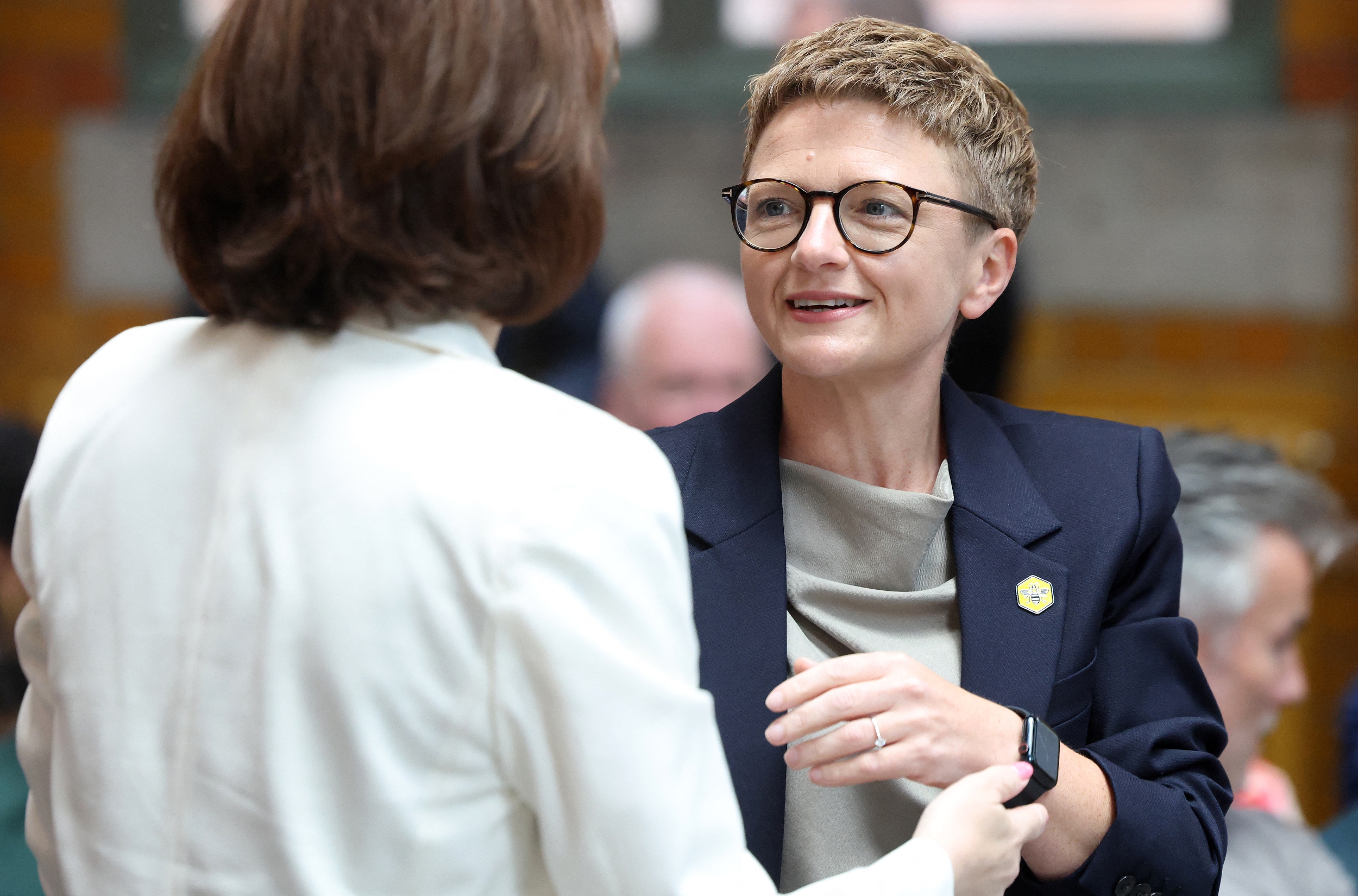
A detailed examination of Mayor Bev Craig's council voting record, Rochdale's deprivation and earnings, affordable housing and transport pledges, and the financial risks behind Greater Manchester's investment plans.
Bev Craig's election as Mayor of Greater Manchester leaves Rochdale with a familiar question: will economic growth across the city-region translate into better-paid jobs, more affordable housing and better transport in the boroughs outside Manchester city centre?
Craig, the former leader of Manchester City Council, succeeded Andy Burnham after the mayoral election on 30 July 2026. The official result gave her 309,525 first- and second-preference votes, on a Greater Manchester turnout of 25.14%. Turnout in Rochdale was 22.95%, and she received 15,927 first-preference votes in the borough.
Her pledges on housing, public transport, high streets and industrial regeneration speak directly to several of Rochdale's needs. But the financial distinction between projects approved, investment proposed and outcomes delivered is essential.
ROCHDALE'S DEEPER ECONOMIC PROBLEMS
ONS figures reported through Nomis put Rochdale's employment rate for people aged 16–64 at 67.1% in the year to March 2026, against 75.5% across Great Britain. Estimated unemployment was 7.2%, compared with 4.5% nationally, although the ONS warns that survey-based local unemployment estimates have small-sample limitations.
In 2025, around 33.5% of working-age residents held a qualification at RQF Level 4 or above, compared with 48.6% nationally. The median weekly earnings of full-time employees resident in Rochdale were £689.50, against £766.60 in Great Britain.
According to the Government's 2025 English Indices of Deprivation, Rochdale's employment deprivation measure was 20.3%, among the highest of England's local authorities. A neighbourhood identified as Rochdale 010C has repeatedly appeared among the country's 100 most deprived neighbourhoods.
These figures expose the limitations of equating economic development with prosperity for existing residents. A growing regional economy does not automatically lift household earnings if local people cannot reach the jobs, lack relevant qualifications or cannot afford the homes built nearby.
A MAYOR WITHOUT A PARLIAMENTARY VOTING RECORD
Craig has never served as a Member of Parliament. Burnham was previously the MP for Leigh and a Cabinet minister. Tony Lloyd, the interim Greater Manchester mayor before Burnham, was also an MP.
Craig entered Manchester City Council in 2011 and became its leader in December 2021. Her record must therefore be examined through council and combined-authority decisions, rather than voting divisions or questions in the House of Commons. Attributing parliamentary votes to her would be incorrect.
This distinction is not unusual among English regional mayors. West Midlands Mayor Richard Parker, North East Mayor Kim McGuinness and South Yorkshire Mayor Oliver Coppard had not served as MPs before taking office. The question is what experience of budgets, national negotiations and local delivery each officeholder brings, not whether a Commons career is a qualification for office.
WHAT HER COUNCIL DECISIONS SHOW
While Craig led Manchester City Council, the authority approved a 2026/27 revenue budget exceeding £1 billion and a 4.99% council tax increase, incorporating a 2% adult social care element. The council said this supported existing services, investment in communities, housing and public provision.
At the Greater Manchester Combined Authority meeting on 13 February 2026, the authority endorsed a Band D mayoral general precept of £153.95: £92.20 relating to fire and rescue and £61.75 to other mayoral functions. The decision followed a named unanimous vote. Compared with the previous year, the Band D precept rose £25.
These decisions were collective, and the latter was a proposal originally brought by Burnham, not a unilateral Craig tax policy. Nevertheless, the record is relevant when evaluating promises to reduce household costs and decisions about how services are paid for.
Craig was also a portfolio lead on the Greater Manchester Good Growth Fund and integrated investment pipeline approved in November 2025. The authority reported initial potential investment capacity in excess of £1 billion and approved borrowing of up to £150 million against future retained business rates.
The phrase '£1 billion investment' should not be mistaken for £1 billion in unencumbered grants. Parts of the programme involve repayable finance, borrowing or contributions from other institutions. How much is ultimately invested, and where, is more meaningful than the initial headline figure.
AFFORDABLE HOUSING: WHAT DOES THE PROMISE MEAN FOR ROCHDALE?
Craig has pledged 50,000 council, social and genuinely affordable homes across Greater Manchester by 2039, including 10,000 homes delivered, under construction or in the pipeline by May 2028.
The three categories in that near-term target are not equivalent. A completed home can be occupied. A home under construction may still face delivery risks. A home in the pipeline may lack full financing or planning approval.
Over roughly 13 years, 50,000 homes implies an average of nearly 3,850 annually across the region, although actual delivery is unlikely to be evenly spread. The programme relies on public and private land, delivery partners and capital funding that will vary from scheme to scheme.
Rochdale needs published borough-specific targets, a social-rent breakdown, site-by-site funding and delivery dates. 'Affordable' as a statutory housing designation is not always affordable for a household on below-average wages.
TRANSPORT: AN AREA WHERE THE MAYOR HAS DIRECT SPENDING CHOICES
Burnham's transport legacy includes the Bee Network and bringing local buses under public control. Craig has committed to extending free Bee Network bus travel to young people aged 11–16, building on the existing scheme for those aged 16–18.
Transport for Greater Manchester estimates that nearly 200,000 young people could benefit, saving families up to about £500 per eligible child a year. The proposed start date is January 2027, but detailed eligibility and the formal decision process have yet to be completed. The combined authority's forward plan lists a relevant decision for November 2026.
There is a financial trade-off: cheaper travel can widen access to education and employment, while recurring concessions can create continuing expenditure or foregone fare income. An annual programme budget, estimates of extra journeys and bus capacity would make the policy's cost clearer.
Meanwhile, Rochdale, Heywood and Middleton have longstanding demands for stronger rail and tram links. Early development funding for the Oldham–Rochdale–Heywood–Bury tram-train concept should not be confused with an approved construction budget.
In a September 2026 parliamentary answer to Heywood and Middleton North MP Elsie Blundell, the Department for Transport confirmed that Greater Manchester is due £2.5 billion in Transport for City Regions funding between 2027/28 and 2031/32, and that scheme prioritisation rests with the mayor. That does not mean all of the money is free for the tram proposal: other regional transport commitments compete for the same settlement.
MIDDLETON AND ATOM VALLEY
Middleton is a practical test of whether investment can extend beyond Manchester's commercial centre.
On 25 September 2026, the GMCA approved the proposed designation of a Middleton mayoral development area, subject to the borough council's consent. Rochdale Council Cabinet endorsed the plans on 29 September. The proposed Middleton Co-operative Mayoral Development Corporation is intended to coordinate land, investment and regeneration.
A development corporation can help assemble and develop sites, but the designation alone creates neither jobs nor homes. Residents will need to know the initial public expenditure, which businesses are being attracted and whether vacant premises are being brought into productive use.
Atom Valley and plans for a Sustainable Materials and Manufacturing Centre offer the possibility of advanced manufacturing employment in Rochdale. Earlier GMCA proposals included an indicative allocation of up to £15 million for the centre. Indicative funding, however, is not evidence that the whole scheme has been built or that local recruitment benefits have been achieved.
Craig's proposed £20 million Good Growth High Streets Fund raises a similar question. Although a simple division across Greater Manchester's ten boroughs would imply £2 million each, that is not the fund's published allocation mechanism. The official forward plan schedules the launch decision for 13 November 2026. Its distribution and final conditions remain important.
IS THE ECONOMIC PROGRAMME FINANCIALLY FEASIBLE?
Three kinds of promise require different financial tests: ongoing services, one-off capital construction and investment meant to generate repayments or returns.
Transport concessions may need continuing annual support. Housing and infrastructure require capital, planning approvals, land and delivery partners. Investment financed by borrowing must produce enough income or wider economic benefit to justify financing costs and risk.
The Good Growth Fund's capacity incorporates future retained business-rates income and borrowing, so its published performance should be judged against debt-service costs, reserves, expected returns and delays. Lower-than-expected project returns could restrict later investment capacity.
There is an economic case for public intervention where contaminated land, weak connectivity or low private returns prevent development. Equally, a funding announcement does not remove the possibility of construction inflation, overruns or weak returns.
None of these observations establishes that Craig's programme is either fully financed or unaffordable. An authoritative judgement requires programme-level budgets that separate committed grants from lending, approved borrowing from available cash, and announced schemes from projects ready to proceed.
HOW OTHER REGIONS ARE APPROACHING THE SAME QUESTIONS
The West Midlands, with a broadly comparable metropolitan scale, has pursued a mix of housing, regeneration and transport investment under Richard Parker. Its announced Futures Fund draws on several funding and investment partners rather than operating simply as a direct grant pot.
In Liverpool City Region, Steve Rotheram has pursued bus franchising and integrated transport, while South Yorkshire's Oliver Coppard has combined transport reform with access to skills and work. Their regions differ in population, devolved powers, infrastructure and financial structure, making simplistic headline spending comparisons unreliable.
For Greater Manchester, much of the institutional machinery was developed under Burnham: bus franchising, devolved transport decisions, investment coordination and city-region policy-making. Craig inherits that machinery rather than beginning from scratch.
WHAT THE BOROUGH SHOULD BE ABLE TO MEASURE
Rochdale residents should be able to see investment figures broken down by borough and funding type; affordable homes completed and their rents; local recruitment and wages on public-backed schemes; transport projects with approved construction budgets; and the proportion of high-street funding that actually reaches each community.
The same applies to Atom Valley and Middleton. How many genuinely new posts are created? How many go to Rochdale residents? How much public borrowing is involved? Which sites have actually begun construction?
Craig has made commitments that address recognisable challenges in Rochdale. Some draw on programmes already in progress; others remain targets or proposals requiring further approval. The economically meaningful comparison with Burnham and mayors elsewhere will be based on achieved outcomes and published finances, not the number of projects announced.
For Rochdale, the fundamental test is whether city-region investment reaches households facing lower wages, weaker employment prospects and inadequate transport connections — and whether the financial costs of delivering it remain transparent.
SOURCE DOCUMENTS
Greater Manchester mayoral election 2026: https://www.gmelects.org.uk/result2026/
ONS/Nomis Rochdale labour market profile: https://www.nomisweb.co.uk/reports/lmp/lad/1778385128/report.aspx
English Indices of Deprivation 2025: https://www.gov.uk/government/statistics/english-indices-of-deprivation-2025/english-indices-of-deprivation-2025-statistical-release
Manchester City Council 2026/27 budget: https://www.manchester.gov.uk/news-stories/2026/council-approves-1bn-202627-budget-to-improve-manchester
GMCA precept 2026/27 decision: https://democracy.greatermanchester-ca.gov.uk/ieIssueDetails.aspx?IId=28700&Opt=3&PlanId=0
GMCA Good Growth Fund investment strategy: https://democracy.greatermanchester-ca.gov.uk/ieIssueDetails.aspx?IId=27462&Opt=3
GMCA Middleton development designation: https://democracy.greatermanchester-ca.gov.uk/ieIssueDetails.aspx?IId=30722&Opt=3
Rochdale Cabinet, 29 September 2026: https://rochdale.moderngov.co.uk/ieListDocuments.aspx?CId=116&MeetingId=7156
Mayor's housing programme: https://www.greatermanchester-ca.gov.uk/news/mayor-unveils-plan-to-deliver-a-new-generation-of-50-000-council-and-genuinely-affordable-homes-and-calls-on-public-bodies-to-free-up-land-as-part-of-new-public-sector-land-bank/
Bee Network youth free travel: https://tfgm.com/tickets-and-passes/discounted-and-free-travel/young-people/free-travel-for-young-people
Parliamentary answer on Heywood and Middleton transport: https://questions-statements.parliament.uk/written-questions/detail/2026-08-28/22756
GMCA High Streets Fund forward plan: https://democracy.greatermanchester-ca.gov.uk/mgIssueHistoryHome.aspx?IId=31303&PlanId=244&RPID=0
Sources
Read next
 PoliticsNew Greater Manchester Mayor Bev Craig visits Rochdale
More from Rochdale
 Rochdale deputy council leader detained twice in Pakistan
 Letchworth Avenue closed to vehicles for roadworks until 14 December
 Rochdale White Ribbon vigil: where Wednesday's walk starts and how to joinThinking about fostering? Free advice stall at Rochdale Riverside on WednesdayMorning Briefing: Monday 23 November 2026
More PoliticsSee all ›
Rochdale South Township Committee meets on Wednesday: when and where Rochdale Diversity Awards celebrate community contributions
 Rochdale council deputy leader detained briefly in Pakistan during civic visit
 Safeguarding concerns, community costs and fireworks raised at Rochdale council meeting
 Heywood and Middleton North MP visits Redwood School’s sixth form at Phoenix Centre
Legal and editorial note
This factual analysis distinguishes adopted budgets, indicative funding and proposals. Election, housing and labour-market figures refer to the dated primary sources listed in the article.
Right to reply: Corrections or a right of reply may be sent to news@rochdaledaily.co.uk.