
The Baum Rabbit: the ghostly white hare that belonged to St Mary in the Baum
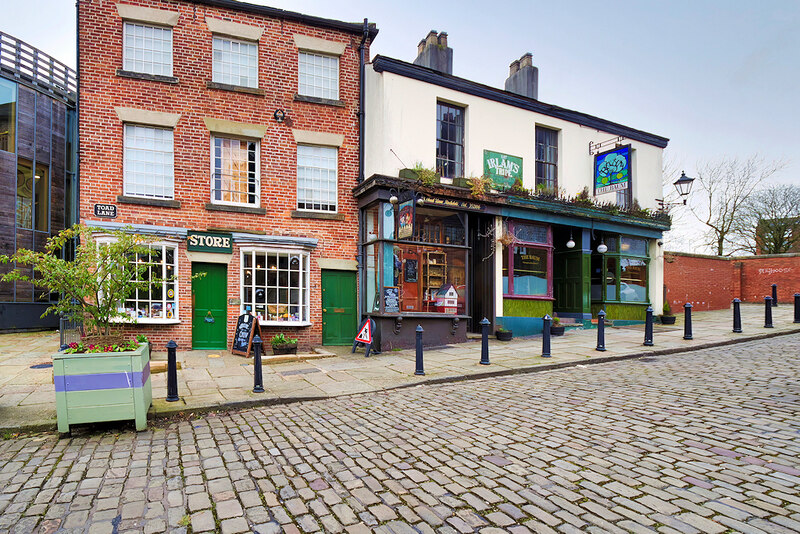
A local boggart in the shape of a white rabbit was a fixture of Rochdale folklore around St Mary in the Baum; nineteenth‑century guides and dialect collections record how families used the story as a warning and a joke.
You can still stand outside St Mary in the Baum on St Mary’s Gate and see how easy it would have been, in the years before the town filled the fields, to imagine something uncanny stirring among the tombstones.
The church on this site was founded as a chapel of ease in the 1740s; today’s building dates to 1909–11.
Local history collections record that the graveyard and its approaches were long the stage for a phantom known in the Lancashire dialect as the Baum Rabbit (or Baum Rappit). That, at least, is what the nineteenth‑century parish histories and later compilers say.
(Facts about the church’s foundation and listing come from Historic England and the National Churches Trust; the folkloric note is recorded in local parish history.)
The simplest, best‑documented point is this: “Baum Rabbit” was a local name for a ghost story said to haunt the vicinity of St Mary’s Chapel (Cheetham Street).
The entry in a standard history of the parish plainly describes the name and the traditional belief that a white rabbit haunted the chapel yard. That is a recorded piece of local tradition, not proof of anything supernatural.
The primary value of the story is cultural: it shows what people around Rochdale saw, said and passed on about the town’s edges. (The parish history that records the entry is available in the local historical compilation.)
What do we know about how people used the tale? Nineteenth‑century and later printed sources and dialect collections suggest the Baum Rabbit behaved like other British “bogies” — a cautionary figure.
Writers who collected local anecdotes and dialects quote the rabbit in short exchanges and refer to it as a thing to frighten children or explain odd noises.
Folklorists and local historians have shown the phrase “baum‑rappit” used in speech as a shorthand reaction to something unlikely or imagined.
In other words, for many Rochdale families the Baum Rabbit was a piece of verbal culture: a nursery bogey, a joking local mascot in dialect tales and an item of town gossip recorded in journals and collections.
How early is the story on the record?
The church was established in the 1740s and the graveyard was part of a densely inhabited area by the mid‑nineteenth century; the Baum Rabbit appears in nineteenth‑century parish and dialect material and in local journals and sketches from that period.
Later folklorists and a modern survey of local traditions have gathered those nineteenth‑century mentions into a recognisable thread.
There is no reliable documentary evidence that the story is medieval; the available scholarship treats the rabbit as an eighteenth‑/nineteenth‑century urban graveyard boggart rather than an ancient relic.
Which details are uncertain or unverified? Several colourful claims turn up in later retellings — that the beast grew to enormous size, that it was shot and the shot passed through its body, or that clergy recorded sightings in parish registers.
Those claims appear in popular retellings and should be treated cautiously; the surviving primary texts (parish history, dialect entries and contemporary newspapers cited in later studies) do not substantiate sensational particulars.
Where a specific newspaper or diary entry names a date or witness, scholars either quote it precisely or mark it as anecdote; where no such original is found, the safer judgment is that the detail is part of oral amplification.
Why did Rochdale keep telling the story?
The Baum Rabbit seems to have worked on several levels: as a practical warning (keep children from the graveyard at night), as a local joke in dialect that marked belonging and identity, and as material for the town’s storytellers and periodicals.
As urban Roche‑dale replaced fields and closed off some old shortcuts in the later nineteenth century, those physical changes also altered the story’s stage; yet the name survives in local memory and even in pub names and tourist notes.
If you’re after a next step: the best primary places to follow the trail are the parish history entries that note the Baum Rabbit and the official record on the church’s history and listing.
Those give you the verifiable facts — where the chapel stood, when the present building dates from and that a ghostly rabbit was part of local tradition — and let you read the folklore in its proper, human context.
Sources
Read next
 CommunityRochdale White Ribbon vigil: where Wednesday's walk starts and how to join
More from Rochdale
 Rochdale deputy council leader detained twice in Pakistan
 Letchworth Avenue closed to vehicles for roadworks until 14 DecemberThinking about fostering? Free advice stall at Rochdale Riverside on WednesdayMorning Briefing: Monday 23 November 2026Overwhelming support for veterans' flats plan at Denehurst House
More CommunitySee all ›
Middleton Library to explore ghost stories and the real history behind themRochdale Masters and Mayfield Movers raise nearly £15,000 in charity walks Rochdale AFC launches Christmas Toy Appeal for local families in needWinter Wood Grotto returns to Rochdale with new seasonal show
 Rochdale's Springhill Hospice wins three garden awards
Legal and editorial note
This article was compiled from identified public sources and may be updated when further verified information becomes available.
Right to reply: For corrections or a right of reply, email news@rochdaledaily.co.uk.