
Is there really a secret tunnel under Middleton between the Ring O’Bells and St Leonard’s?
Local tradition says a Civil War escape‑passage ran from the Ring O’Bells to St Leonard’s, but formal records and heritage surveys offer no published proof.
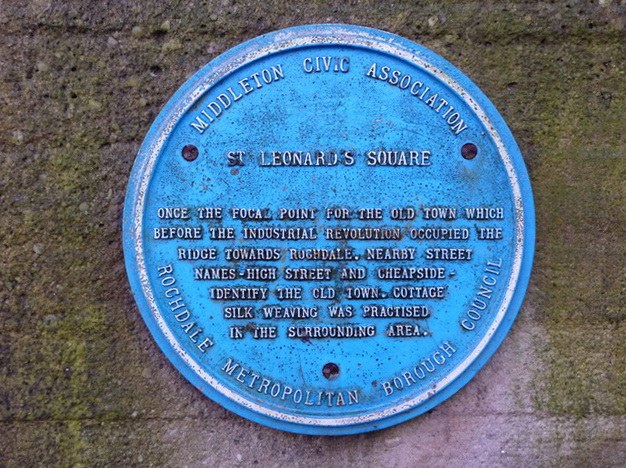
Short answer: no published, verifiable evidence has been found that a continuous built tunnel links the Ring O’Bells (St Leonard’s Square) and St Leonard’s Parish Church. ([historicengland.org.uk](https://historicengland.org.uk/listing/the-list/list-entry/1162332))
The story is older and more persistent than the proof.
For generations Middleton guides, ghost‑tour pages and regional folklore compilations have repeated a neat Civil War image: Royalists meet in the pub cellar, a hidden passage runs under the road to the church and the plotters slip away when the Roundheads arrive.
The tale is still used on commercial ghost walks and local history roundups. ([wyrdways.uk](https://wyrdways.uk/sites/ring-o-bells-middleton-sad-cavalier/))
Where the legend runs into trouble is the documentary and professional heritage record. St Leonard’s is a Grade I listed medieval church whose National Heritage List entry sets out its fabric, phases and sensitivity in detail; that entry makes no mention of a connecting passage.
([historicengland.org.uk](https://historicengland.org.uk/listing/the-list/list-entry/1162332)) The Middleton Town Centre conservation‑area appraisal kept by Rochdale Council, the document that describes known historic assets and archaeological sensitivity across the square, likewise does not record any mapped or scheduled tunnel between the buildings. ([planning.data.gov.uk](https://www.planning.data.gov.uk/entity/6313525))
Stories of bones, buckles, muskets and a landlord frightened by a flying stone appear repeatedly in popular accounts and in later retellings of a local newspaper item often cited as the Oldham Evening Chronicle, 18 August 1972.
Those secondary sources show how the tale has been told and retold, but I could not find a publicly accessible archaeological report, museum accession entry or digitised press copy that records the 1972 item or the claimed finds to the standard used by heritage professionals.
In short: there are repeated claims of finds in folklore and tourism material, and an absence of a published excavation report or archive catalogue entry to corroborate them. ([wyrdways.uk](https://wyrdways.uk/sites/ring-o-bells-middleton-sad-cavalier/))
That absence matters.
If a brick‑lined or purpose‑built passage had been known, recorded or opened in modern times it would normally appear in at least one of these places: the national listing or schedule, the local conservation appraisal, an archaeological trust report, or a museum accession catalogue for recovered artefacts.
None of those formal records I checked lists a continuous tunnel between the pub and the church. ([historicengland.org.uk](https://historicengland.org.uk/listing/the-list/list-entry/1162332))
Does that mean there was no subterranean connection at any point in any century? Not necessarily.
Old cellars, drains, short escape routes and rubble‑filled voids are common in historic town centres; people over the centuries may have used cellars and alleys in ways oral tradition remembers as a “tunnel”.
The distinction between an occasional informal route (a bricked‑up opening, a man‑hole, a drainage culvert) and an intentionally constructed, continuous tunnel is crucial and is where legend and archaeological standards part company. ([historicengland.org.uk](https://historicengland.org.uk/listing/the-list/list-entry/1162332))
If a reader wants to move the story from local memory to proof, the practical steps are straightforward.
Search original local‑paper runs (Rochdale Local Studies and the borough archives hold many microfilm runs and can advise on the Oldham Evening Chronicle reference); ask the Local Studies Centre (Sparth / Touchstones) and Middleton Library about any accessioned finds or records from Ring O’Bells cellars; and, if someone locates artefactual material, have it recorded by an accredited archaeologist and offered to a museum or deposited with the borough collection.
The local archives are the place to start for newspaper, court and parish records. ([yourtrustrochdale.co.uk](https://www.yourtrustrochdale.co.uk/venues/local-studies-centre/))
For most Middleton people the tunnel story is less a missing map than a useful piece of place‑making: it links real places (a medieval church, an old inn) to real turmoil (the Civil War) and to the town’s habit of telling itself stories about its past.
That is worth recording; just not the same thing as saying the tunnel, as described in the tales, has been demonstrated by archaeology or primary documents.
Treat the passage as a well‑rooted local tradition with plausible historical context, and—until someone produces an excavation report or archive copy to the contrary—also treat the physical tunnel as unproven. ([wyrdways.uk](https://wyrdways.uk/sites/ring-o-bells-middleton-sad-cavalier/))
Sources
Read next
 CommunityWho is the 'Sad Cavalier' said to haunt Middleton's Ring O'Bells?
More from MiddletonSee all ›
 Middleton pupils form giant star to celebrate Rhodes Green school's new nameMiddleton residents warned about scammers posing as council officials
 Middleton Council completes £3.3 million purchase of Warwick Mill
 Boyes opens new store in Middleton Shopping Centre tomorrow
 Three-year-old boy remains critical in hospital after incident at Middleton nursery
More CommunitySee all ›
 St Luke’s Church in Deeplish to hold Remembrance Day service on 8 November
 Rochdale care leaver behind Little Acts of Christmas explains why no young person should go without a gift103-year-old D-Day veteran shares his story at Rochdale church event
 The Baum Rabbit: the ghostly white hare that belonged to St Mary in the BaumRochdale to commemorate Remembrance Sunday with local events on 8 November 2026
Legal and editorial note
This article was compiled from identified public sources and may be updated when further verified information becomes available.
Right to reply: For corrections or a right of reply, email news@rochdaledaily.co.uk.